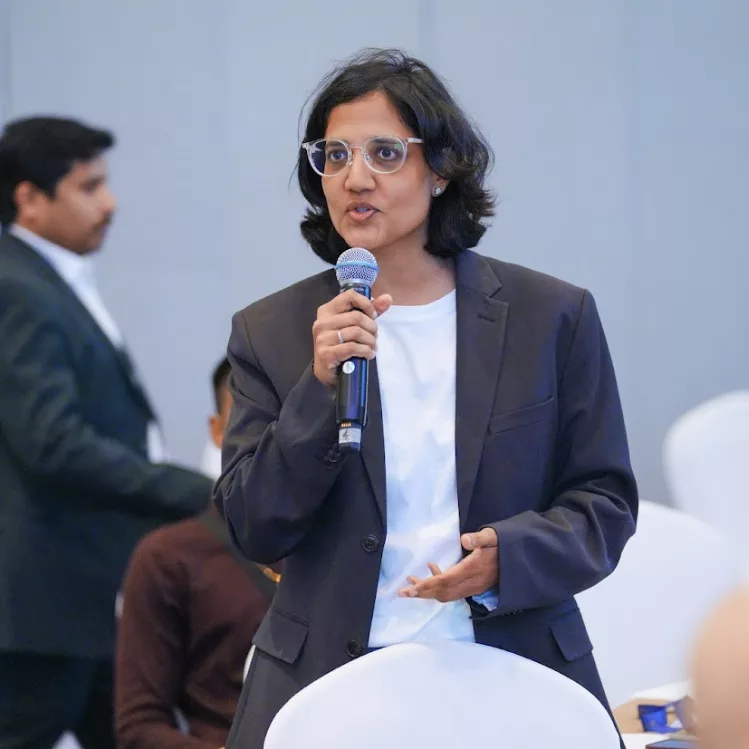


For founders and high-performing leaders, reinvention is often seen as a reaction to crisis. Antoinette Antoine flips that narrative: she teaches that true reinvention is a proactive, strategic discipline—a competitive advantage, not a survival tactic. Drawing on years of experience guiding executives through personal and professional transformation, she helps leaders audit their identity, upgrade their leadership, and build companies that reflect clarity, resilience, and intentionality. In a world where burnout and chaos can quietly erode both life and business, Antoinette shows that slowing down and checking in with yourself is not the opposite of scaling—it’s the secret to outpacing the market and yourself.
“Reinvention isn’t survival—it’s leverage.”
Reinvention is often associated with crisis. How can entrepreneurs use it strategically, not reactively?
By treating reinvention as a leadership discipline, not a rescue mission.
Crisis-based reinvention is survival. Strategic reinvention is leverage.
When founders proactively assess what no longer fits, their identity, their leadership style, their operating model — they stay ahead of the market and themselves.
The entrepreneur who regularly audits who they’re becoming will always outpace the one waiting for life to force their hand
Startups move fast — but personal transformation takes time. How do you help leaders honour both?
By teaching them that slowing down is not the opposite of scaling — it’s the prerequisite.
Personal transformation doesn’t require months on a mountain; it requires intentional pauses inside the chaos.
I help founders create internal checkpoints:
“Who am I today? What’s driving me? What’s draining me?”
When you integrate transformation into your operating rhythm, you don’t lose momentum — you compound it.
What early warning signs tell you a founder is heading toward burnout or identity collapse?
Three red flags show up every time:
1. Hyper-productivity becomes the coping mechanism. They work to outrun themselves.
2. Their decisions get noisy. More reactivity, less clarity.
3. They stop recognising their own life. Success externally, emptiness internally.
By the time the body collapses, the identity has already gone first.
In your experience, how does personal turmoil show up in business performance—even when leaders believe they’re hiding it well?
It leaks through leadership tone.
It shows up in rushed decisions, micromanagement, impatience, avoidance, inconsistent confidence, and hiring the wrong people because they’re emotionally depleted.
The business always mirrors the founder’s internal state.
You can hide turmoil from your team — but your business model will reveal you.
You work primarily with high-achieving men. What patterns do you see in how they handle failure?
High-performing men usually respond to failure in two ways:
1. They intellectualise it. They analyse instead of feel.
2. They overcorrect. More pressure, more performance, more armour.
Failure crushes them not because they failed, but because they built their identity on being unbreakable.
My work is helping them detach their worth from their scoreboard.
What is the biggest misconception startup leaders have about “mental toughness”?
That mental toughness means emotional suppression.
It doesn’t. It means emotional capacity.
The toughest leaders aren’t the ones who feel nothing.
They’re the ones who can feel deeply, recover quickly, and still make high-quality decisions.
Emotional intelligence isn’t soft — it’s commercially smart.
Many entrepreneurs believe they can build while breaking down. What do you say to them?
You can — but you’ll break the business too.
Founders often forget that the company is built on their nervous system.
If they’re chaotic, the company becomes chaotic.
If they’re depleted, the company stagnates.
You don’t need to be perfect to build — but you do need to be resourced.
You talk about the “messy middle.” What does that look like for someone building a company from scratch?
It’s when the vision is clear, but the identity is not.
The messy middle is the stage where founders are becoming someone new, but haven’t fully let go of who they were.
It’s uncomfortable, disorienting, and necessary.
It’s also where most great companies — and great leaders — are forged.
Reinvention is a competitive advantage when done intentionally. What’s the first step for a founder who knows they need to change?
Tell the truth to themselves before they tell it to anyone else.
Reinvention starts with one honest sentence:
“This version of me is no longer enough for where I’m going.”
Once that truth is spoken, the path becomes obvious: boundaries, clarity, upgraded identity, upgraded behaviour.
If a startup CEO could only do one thing today to protect their emotional and professional longevity, what would it be?
Build a support structure that doesn’t rely solely on their willpower.
That could be a coach, a mentor, a board, or a psychological framework.
Longevity isn’t about being superhuman — it’s about not trying to do everything alone.
Isolation is the enemy.
Resourced leaders build enduring companies.
“The toughest leaders feel deeply, recover quickly, and still make smart decisions.”