

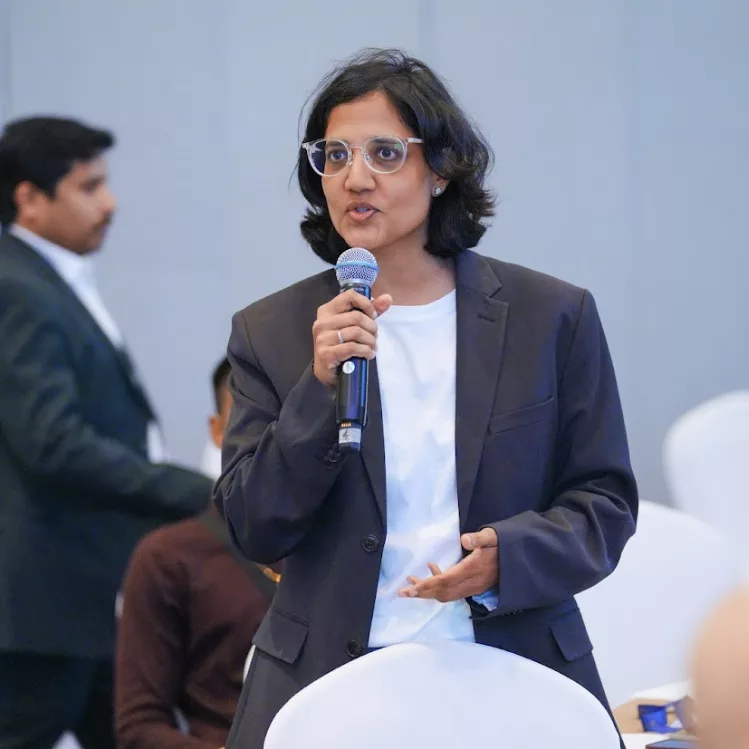
Aanchal Gupta is on a mission to bring AI innovation to industries that are often overlooked in the global tech conversation. Through her company, Agents Stack, she tackles some of the toughest operational challenges in sectors like maritime, construction, and manufacturing—unlocking efficiency, safety, and large-scale impact. With a unique blend of curiosity, resilience, and purpose-driven leadership, Aanchal is proving that meaningful innovation doesn’t have to happen only in the tech spotlight—it can transform entire economies and communities.
“AI can transform overlooked industries and create real-world impact.”
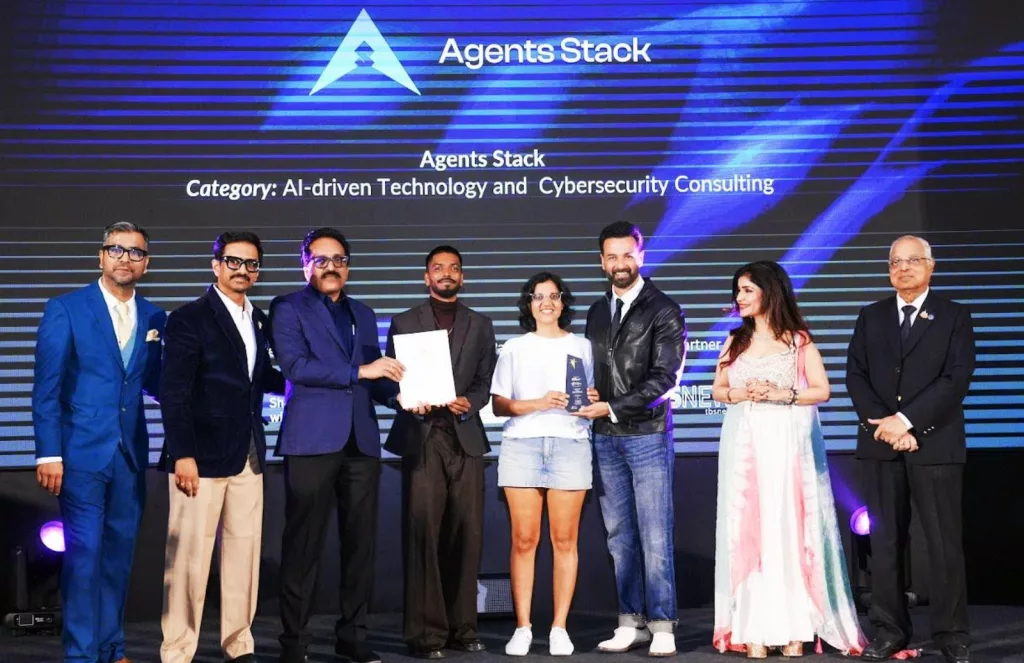
What inspired you to focus on AI solutions for industries that are often overlooked in the innovation conversation?
My career has all been in the overlooked industries till date so I’ve seen firsthand the talent gaps, the innovation challenges in these industries and the high impact that AI can bring on efficiency and innovation. When I look back at what led to joining these industries, it came down to two things: it’s mostly the sheer size of the economy that it can drive and the nature of problems being tough.
I get excited by tough problems, especially when solving them can unlock large-scale impact.
How did the evolution of AI make it possible for you to build a tech company without a coding background?
Over the last decade, CTOs were in highest demand and it was tough to get CTOs excited for your vision. AI changed that. It made coding easier, remote collaboration smoother, and significantly expanded the global talent pool of technical leaders. Even though I still don’t enjoy coding myself, the accessibility of AI tools and the larger pool of CTOs who want to build and innovate, gave me the confidence to pursue a bigger vision with much faster innovation cycles which was tough earlier.
What’s been the biggest challenge in turning complex infrastructure problems into scalable AI solutions?
A scalable solution to a complex problem needs at least 10-15 different skill sets ranging from strategy, business process understanding, data, coding, AI, legal, human centric design, change management, quality assurance and more. Bringing all these together and aligning them toward one scalable solution is the biggest challenge.
How do you validate your product-market fit in sectors that are traditionally slow to adopt new technologies?
There are always innovators in the market who like to constantly try new products or markets. Once associated with those teams with successful outcomes, it becomes easier to build a continuous process of testing, validating, and refining your product.
What advice would you give startup founders who want to combine purpose and profit?
Understand what you’re naturally great at and focus your energy there. Bring in people who excel in areas you don’t. Building products with purpose is often easier than building sustainable revenue around them. The best approach is to leave it to those who have an edge in building revenue functions by finding the high impact problems and working backwards from there to think of a sustainable product.
How do you build teams that can navigate both tech innovation and sector-specific operational complexities?
You need to find people who have one of the skills through learning, degree etc. and the other one has a passion for learning. For example, my degree is Computer Science but I’ve always been fascinated by hardware and networks, always trying to combine tech with the physical world and hardware. Agents Stack team is mostly a set of people who have studied both hardware and tech either through courses or the professional experiences and stay curious in blending both to get the high impact outcomes.
How do you approach fundraising and investor conversations when your company focuses on non-traditional tech sectors?
I haven’t cracked the code on fundraising yet, we’re still bootstrapped. The goal will be to stay more on debt and less equity, so we have the time to build patiently for the sectors we are aiming for. These industries may not deliver 100x returns to investors, but they deliver 100x returns to society by improving economic distribution and efficiency. Banks will likely be a strong partner for us because our mission aligns closely with theirs.
What skills or mindset do you think are essential for early-stage entrepreneurs aiming to make a global impact?
Curiosity and resilience. You need deep curiosity about global problems and the resilience to adapt quickly, especially now, with AI reshaping organizations and governments. Agents Stack has pivoted a lot from where it started because we’re constantly listening to customers and solving new problems as they arise. Having a team with global experience is absolutely essential if aiming for global impact to understand the nuances of each region and staying local as much as possible for fast adoption.
Where do you see Agents Stack in five years, and what’s your vision for AI serving industries beyond the usual tech spotlight?
In five years, we aim to significantly improve operational efficiencies making a good impact on the economy and environment with ESG focused goals specially in sectors like maritime, construction, and manufacturing which have long been overlooked and face major challenges in productivity and worker safety.
I am also passionate about tourism, wildlife and education and personally would like to spend more time on those categories with AI. As with Geo Spatial intelligence and AI driven technology integrating with banks and telcos, there is a massive potential strengthen wildlife conservation, scale faster on ESG goals and drive the education in the remotest areas of Africa, ASEAN or India to educate and create jobs ultimately leading to better health and financial outcomes for the underserved community across the world.
“Curiosity, resilience, and industry know-how drive scalable solutions.”

Startup Business Forum will be featuring high-energy keynote speakers, inclusive panel discussions, and breakout sessions with leaders at the forefront of the technology and business sectors. The Forum offers delegates the opportunity to acquire tactical